
 English
 Russian
 French
 Spanish
 Portuguese
 Italian
 Arabic
 German

Hot News
-
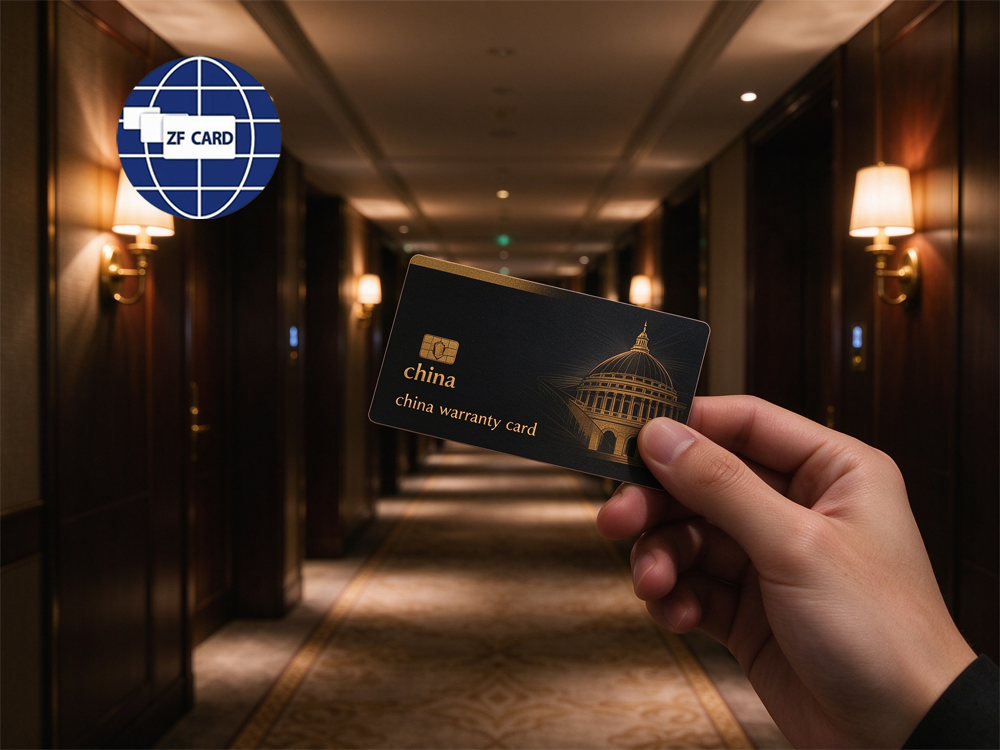 Custom China Warranty Card Designs Nov 19,2026
-
 Thick Plastic Card Solutions from China Factory | Custom RFID Cards for Access Control & Security Nov 13,2026
-
 How to Choose a Smart Card Manufacturer: 9-Point Evaluation Checklist Nov 12,2026
-
 Smart Card Manufacturers: 9 Checks That Separate a Real Factory From a Reseller Nov 09,2026




Custom China Warranty Card Designs
Most warranty card quotes arrive before the supplier has enough information, which means the number you get back is a guess dressed up as a price. A batch of guarantee cards can range from a simple printed PVC card to a foil-stamped, variable-encoded, domed certificate, and those differences move the unit cost a lot. For bulk orders of china warranty card designs, an accurate factory quote depends on what you send in the RFQ and how the supplier breaks the price down. This guide covers the inputs a quotation needs, the line items that should appear, and how to compare bids without missing the features that matter.
A warranty card is a branded proof of purchase that travels with the product for its whole service period. It records the brand, model, serial or batch number, purchase date, dealer, warranty terms, contact details, and often a code for registration or verification. It must stay legible and intact through years in a wallet or drawer, and it carries the brand's unboxing impression. For watches, jewelry, electronics, leather goods, eyewear, and cosmetics, the card is part of the product experience, so its design and build are specified alongside the packaging rather than left as an afterthought.

The spread between two quotes usually comes from a small number of variables. Material and thickness set the base; print colors and surface finishes add setup and per-piece cost; variable-data encoding adds a production step; the order quantity spreads fixed costs over more cards; and packaging and freight shift the landed number. A quote that bundles all of this into one flat figure hides which feature drives the price, which makes it impossible to trim the right option when the budget tightens. A useful quotation separates these items instead of averaging them.
To get an accurate quote, the RFQ should carry the inputs up front. State the product category, the card format and material, the artwork or template idea, whether every card needs a unique serial, barcode, or QR code, the annual quantity and any planned repeat orders, the packaging, and the target delivery date. For china warranty card designs that include a verification code, also note which phone or scanner will read it, because code size and quiet zone affect layout and print setup. The more of these are fixed in the first message, the fewer revisions and the more comparable the return bids become.
A line-item quotation should show each cost driver separately. The base material and thickness appear first, then the number of print colors, any foil, embossing, spot UV, or doming, the variable-data encoding, plate or film preparation, proofing, packaging, and freight. Setup costs such as artwork adjustment, plate making, and proofing are fixed amounts spread across the first run, while the per-piece material and print cost scale with quantity. Asking for this breakdown lets you see which finish to reduce without weakening the card's function.
Quantity is the main lever on unit price. Fixed setup labor does not change whether the order is five hundred or fifty thousand cards, so a small batch carries a higher unit cost to absorb that work. Larger runs bring the per-piece number down, and repeat orders keep the existing plates and print film, which avoids setup charges again. Low-MOQ entry is usually available on common formats and stock materials, but the first run will cost more per piece than a reorder at volume. Ask how the minimum splits across variants and whether setup fees repeat on a second order.
Design preparation affects the quote as well. Artwork delivered in AI or PDF, with fonts outlined, colors in CMYK, and bleed beyond the cut line, enters production directly. Files that arrive in RGB, with missing fonts, or without bleed require an adjustment step that adds setup time and cost. On china warranty card designs, the code area must be left clean and sized for scanning, and foil or embossing must be placed clear of the barcode or QR zone. The cleaner the file, the less the supplier has to rework, and the more accurately the first quote reflects production reality.
Variable data changes the quote in a separate way. If each card carries its own serial number, barcode, or QR code tied to a database, the factory must set up variable-data imposition, verify no number repeats, and read-test the codes before packing. This is a dedicated station and a QC step, not a side print pass. Confirm whether the factory writes the data, exports a matched CSV, or works from your own number list, and whether the code area is locked after encoding. Encoding complexity, code type, and verification level all appear as their own line rather than being absorbed into the print price.
Surface finishing carries its own setup charge. Offset or screen printing handles the base artwork; hot foil stamping, embossing and debossing, spot UV, and domed epoxy each add a process step and often a die or screen. Matte and gloss film change the surface but are usually priced within the print stage. Each extra finish raises the setup cost and the per-piece time, so the finish list should match the brand's positioning. A premium watch card may justify foil and doming; a simple electronics guarantee card may not need either.
Proofing sits between quote and production. A digital proof checks layout and color; a physical proof shows thickness, foil shine, and code readability on your own scanner. Proofing may be quoted as a one-time sample charge that can be credited against the bulk order, or as a separate setup step. Approving a physical sample before the press run prevents a misprinted batch, and the sample cost is usually far smaller than the cost of re-running fifty thousand cards. Ask whether the sample is printed to the same finish and encoding as the bulk order.
When comparing bids, compare the same specification. A low quote that omits encoding, a finish, or individual read testing looks cheap until the missing item appears as an extra later. Match each supplier's line items against your RFQ: material, thickness, colors, finishes, variable data, MOQ, packaging, and defect commitment. If one bid is well below the others, ask which feature it left out rather than assuming it found a cheaper source. The cheapest card on a spec sheet is often the one that fails at the front desk.
Lead time and stock status also shape the quotation. Common card formats and stock materials are held in stock, which shortens the first-run window; special substrates or finishes may need preparation time. Confirm whether any chip or code stock is available locally or must be sourced, because a material shortage stretches the schedule even when the price looks fixed. Put the working-day lead time and a late-delivery term into the order sheet, and keep a buffer between proof approval and the ship date for a revision round.
This is the quotation and production support ZF Card (Zhanfeng) has provided for twenty years as a China-based original card manufacturer. We produce custom guarantee and warranty cards for watch, jewelry, electronics, leather, eyewear, and cosmetics brands, alongside member and access cards, in more than a hundred countries. Our in-house line covers PVC and PETG cutting, offset and screen printing, foil stamping, embossing, spot UV, doming, variable serial and QR encoding, and packing, so a card moves from artwork to finished unit without a middle handoff. When you send an RFQ for china warranty card designs, our reply separates material, print, finish, encoding, setup, and packaging on one line-item sheet.
We hold ISO 9001 and ISO 14001 certification and keep RoHS and REACH documentation ready for export buyers. English-speaking account engineers review your artwork for CMYK conversion, code size, bleed, and finish placement before quoting, then send a physical proof matched to your design before the press run. Common formats and stock materials are held in stock to support a low minimum order, and the artwork, data file, plates, and print film are retained for repeat orders. Every encoded card is read-tested after assembly, lots are retained for traceability, and our defect commitment and re-run terms are written into the order sheet.
The fair way to judge a warranty card design is to hold the finished card and scan its code yourself. ZF Card ships free sample packs to brand owners, distributors, and packaging converters worldwide — you cover the courier, and we send printed PVC cards matched to your artwork, finish, and code requirement.
Send your product category, preferred material and finishes, artwork or template idea, code type if any, and projected annual quantity, and we will reply within one business day with a line-item factory quote, a firm lead time, and a low-MOQ option. Stop guessing what a china warranty card designs quote should include — request your free sample and compare the print, the foil, and the code read on a real card before you commit to bulk production.
-
 Design your card for free
Get Free Design
-
 Free Sample Cards
Get Free Sample
-
 24 hours online service
Contact Us
-
Office Phone
+86 189-3398-5004
-
E-mail
mailto:mary@zfcards.com
-
Office Phone


