
 English
 Russian
 French
 Spanish
 Portuguese
 Italian
 Arabic
 German

Hot News
-
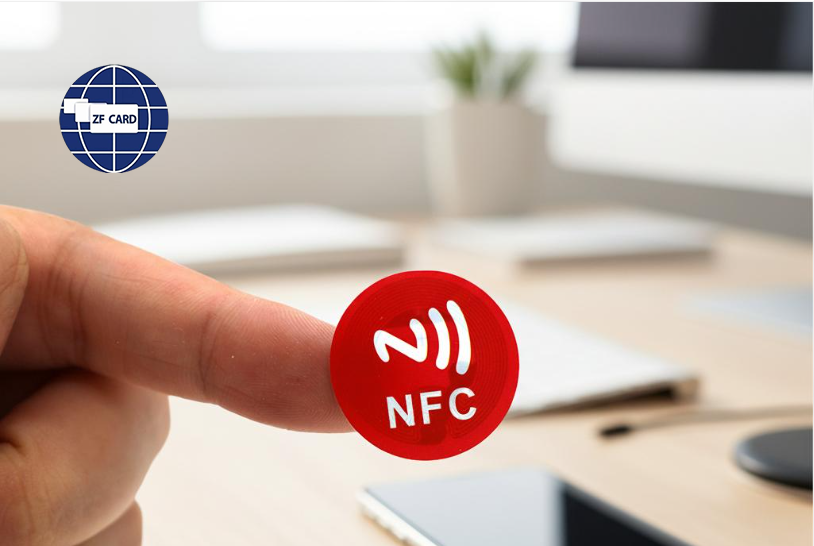 How to Find Reliable NFC Tag Sticker Suppliers for Bulk Custom Orders Nov 03,2026
-
 What to Know Before Ordering Custom Wood RFID Cards for Access Control Oct 29,2026
-
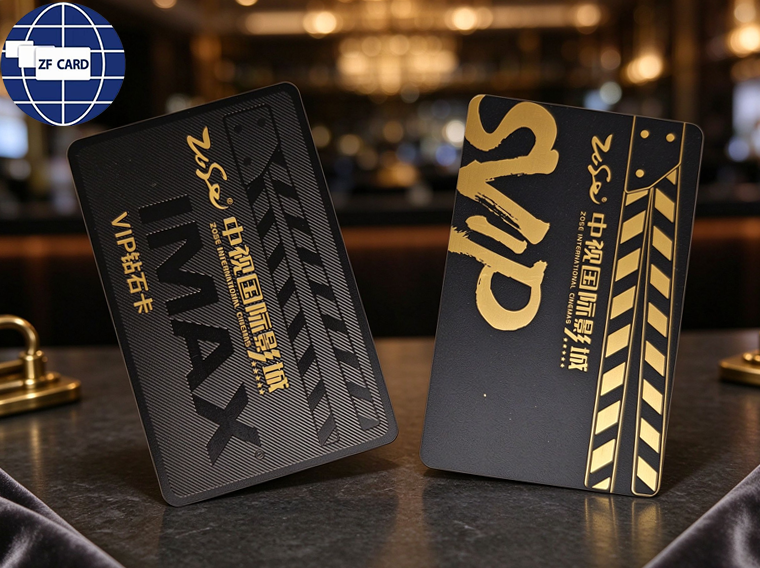 How to Source Customized Product Warranty Cards from China Manufacturers Oct 28,2026
-
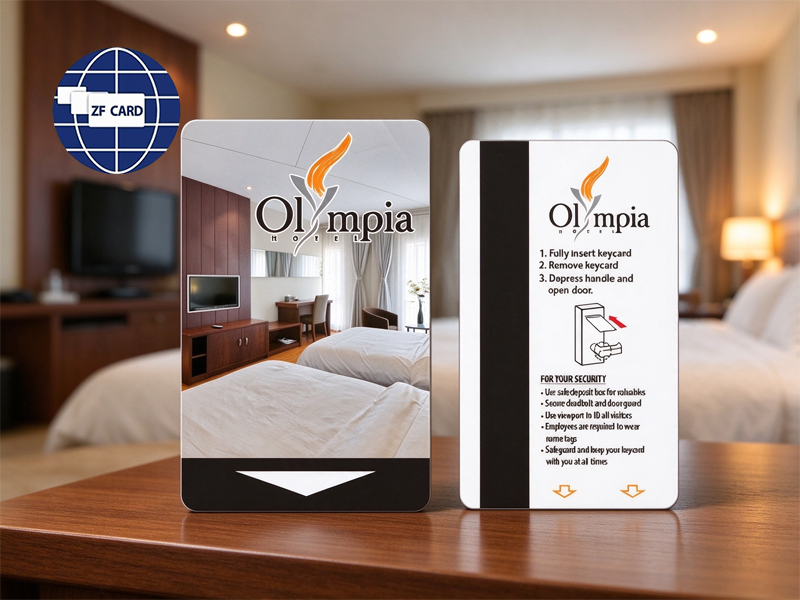
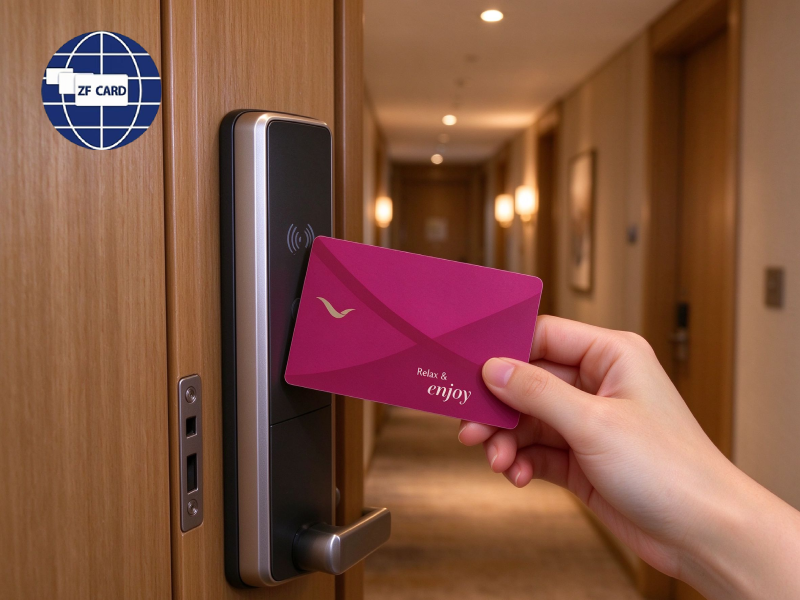 Hotel Key Cards Manufacturers: How to Choose a Reliable Supplier Oct 26,2026




How to Find Reliable NFC Tag Sticker Suppliers for Bulk Custom Orders
NFC tag stickers have become the default "tap to interact" layer for brand marketing, asset tracking, access control, and smart-product packaging. A 30 mm adhesive label holding an NXP NTAG chip, pre-printed with a logo and pre-written with a URL, turns any poster, product box, meeting table, or museum wall into a touchpoint that an iPhone or Android phone can read in a fraction of a second. Buying them by the hundred-thousand is a different exercise than buying a pack of five from a consumer store. Here is what bulk buyers need to know before choosing a supplier.

An NFC tag sticker is a thin self-adhesive label built around a 13.56 MHz NFC Forum-compliant chip and antenna. When a phone is brought within 1–3 cm, the chip powers itself from the phone's RF field and hands back a small NDEF record — usually a URL, a piece of text, a contact card, or an app link. No battery, no pairing, no app required on modern phones. That zero-friction experience is why brands keep ordering them by the pallet rather than by the sheet.
The use cases are wider than most buyers first realize. Marketing teams tap stickers on posters, window decals, product packaging, and business cards to open a landing page, an Instagram profile, a WeChat mini-program, or a restaurant menu. Operations teams tag assets, meeting rooms, and toolboxes. Event organizers use them as tap-to-check-in badges. Museums and trade fairs use them as silent audio guides. Consumer-product brands put them on warranty cards to trigger registration and anti-counterfeiting checks. Each use writes a different NDEF record, and that is where bulk ordering gets specific.
Chip selection is the first real decision. NXP NTAG 213 offers 144 bytes of user memory, enough for a short URL or a contact record. NTAG 215 offers 504 bytes, which is the sweet spot for most marketing stickers and the only chip reliably supported by Amiibo-style hobby projects. NTAG 216 offers 888 bytes for longer URLs, vCards, or multiple NDEF records. Pick the smallest chip that fits your payload, because the chip drives the unit cost. Ask the supplier which chip they stock in volume rather than forcing a rare part number that stretches lead time.
The physical sticker matters as much as the chip. Round labels of 25, 30, or 38 mm are the most common; square and die-cut shapes fit brand kits. Paper labels are cheap and matte, PET labels survive cleaning wipes and outdoor weather, and anti-metal ferrite-backed labels are mandatory on steel cabinets, laptops, and metal product packaging, because bare metal shorts the antenna. Thickness usually lands between 0.2 mm and 0.5 mm; thinner stickers conform better to curved surfaces, thicker ones survive rough handling. Match the sticker to the surface it will live on, not to the product photo on a catalog.
On the technical side, four parameters should be pinned down in writing. First, confirm the chip is genuine NXP silicon rather than a compatible clone, because clones vary wildly in read range and NDEF behavior. Second, confirm the sticker is formatted and ready-to-write out of the pack, or pre-encoded with your chosen NDEF record. Third, ask whether the supplier can lock the tag after writing so end users cannot overwrite your URL. Fourth, ask for a read-range specification against both an iPhone and a mid-range Android phone, because NFC antenna positions differ across handsets and a sticker that works on one brand can be fussy on another.
Bulk customization is where a serious supplier earns the order. For a marketing campaign, every sticker can carry a unique URL — sticker 10001 points to QR10001, sticker 10002 to QR10002 — so the brand can measure which poster performed where. For asset tracking, each sticker carries a unique ID and a sector or URL tied to your inventory system. For retail packaging, stickers are pre-written, serialized, and delivered with a CSV matching the physical label to the encoded record. A supplier that cannot deliver that variable-data encoding in-house will either outsource it (and add a week) or hand you blank tags to encode yourself (and add your own labor). Ask directly whether encoding happens on the same press as printing.
Several failure modes show up only after deployment. A standard sticker pasted onto a steel laptop reads weakly or not at all — the fix is an anti-metal variant. A sticker stuck on a textured or dusty surface loses adhesion within weeks — the fix is a higher-tack acrylic adhesive and a surface prep step. A sticker printed on glossy stock reads fine under a desk lamp but vanishes under direct sunlight because the phone NFC window is hard to find — the fix is a clear printed positioning mark on the label. A supplier who has shipped to real campaigns before will flag these in the proofing stage rather than after your launch.
So where do you actually find a reliable supplier? Three routes exist. Buying through a local reseller or a generic marketplace trader is fastest for small trials, but the trader rarely controls the chip origin, the encoding line, or the defect rate. Buying from an integrator who bundles tags with software is convenient but marks the hardware up heavily. Buying directly from an original manufacturer in China — where the majority of the world's NFC tag stickers are produced — gives you factory-direct pricing, variable-data encoding, and genuine NXP dies, but only if the factory communicates in English, proofs artwork quickly, and stands behind defects after shipment.
When you shortlist factories, run five checks. Ask for a video walkthrough of their printing and encoding line, not just their showroom. Ask for the chip brand and part number on the pro forma invoice. Ask for a physical sample pack — paper, PET, and anti-metal — that you can tap on your own phones and stick on your own surfaces. Ask for a written lead time, a below-0.5% defect commitment, and a re-run clause. Ask whether they deliver the encoded CSV so your analytics team knows which sticker is which. A factory that answers all five on the first RFQ round is a factory worth keeping.
This is exactly the sticker production line ZF Card (Zhanfeng) has run for twenty years as a China-based original smart-card manufacturer. We produce custom NFC tag stickers in paper, PET, and anti-metal ferrite-backed formats, in round, square, and die-cut shapes, around genuine NXP NTAG 213, NTAG 215, and NTAG 216 chips, with documented F08 and other equivalents available for budget projects. Our in-house line runs printing, die-cutting, NDEF encoding, variable serial and URL writing, write-lock sealing, and 100% tap-testing under one roof, which is how brand agencies, marketing teams, asset-management firms, and packaging converters in more than a hundred countries reorder from us.
We hold ISO 9001 and ISO 14001 certification, keep RoHS and REACH documentation ready, and deliver the encoded CSV with every variable-data run so your campaign analytics line up sticker by sticker. English-speaking account engineers own each order from artwork proof through reorder, with a working-day lead time and a defect-rate commitment in the contract. We also tune each sticker's read range against iPhones and Android phones before mass production, because a tag that cannot be found by a customer's phone is a campaign that does not ship.
The only fair way to judge an NFC sticker supplier is to tap their labels on your own phone and stick them on your own surfaces. ZF Card ships free NFC tag sticker sample packs to brand agencies, marketing teams, asset-management buyers, and packaging converters worldwide — you cover the courier, and we send paper, PET, and anti-metal variants pre-written with your chosen URLs and printed with your logo.
Tell us your chip preference, your payload (URL, vCard, or multi-record), your target surfaces, and your projected annual volume, and we will reply within one business day with a compatibility note, a firm lead time, and a factory-direct quote. Stop buying blank tags off a marketplace and encoding them yourself — request your free NFC tag sticker sample pack today and see the print, the adhesive, and the read that twenty years of specialized card manufacturing delivers.
-
 Design your card for free
Get Free Design
-
 Free Sample Cards
Get Free Sample
-
 24 hours online service
Contact Us
-
Office Phone
+86 189-3398-5004
-
E-mail
mailto:mary@zfcards.com
-
Office Phone


